 Call Us
  Location
  Book Now
  Text Us
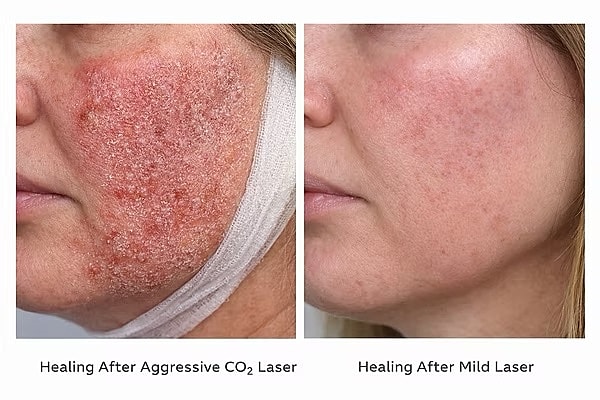
CO₂ laser resurfacing has long been associated with dramatic skin rejuvenation results. For many patients researching laser resurfacing in Miami, CO₂ lasers are often the first technology they encounter.
However, laser resurfacing has evolved. Modern fractional and non-CO₂ laser technologies now allow dermatologists to deliver precision-based skin regeneration, improved customization, and refined results—without relying solely on aggressive skin ablation.
This page explains the key differences between traditional CO₂ laser resurfacing and modern laser resurfacing, helping patients make informed, forward-thinking decisions.
To learn more about today’s advanced options, visit our Laser Resurfacing in Miami page.
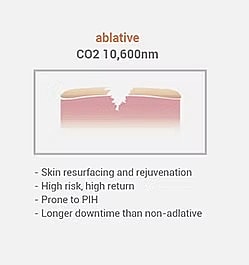
CO₂ laser resurfacing is an ablative laser treatment that works by removing portions of the skin to stimulate healing and collagen production. This technology was groundbreaking when introduced and remains in use for select cases.
Key characteristics of CO₂ laser resurfacing include:
While effective, CO₂ lasers represent an earlier generation of resurfacing philosophy, centered on injury-driven rejuvenation.
Modern laser resurfacing refers to fractional, precision, and 3D laser technologies designed to stimulate collagen regeneration while preserving the skin’s natural structure.
Instead of removing large areas of skin, modern resurfacing delivers controlled energy at specific depths, allowing treatment to be customized to the patient’s skin type, concerns, and tolerance for downtime.
Explore modern resurfacing approaches on our Laser Resurfacing in Miami page.
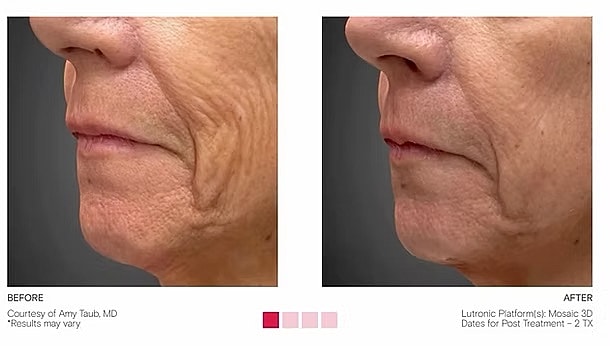
As laser technology has advanced, newer CO₂ and Erbium laser systems have been introduced to reduce downtime compared to traditional fully ablative resurfacing.
To achieve faster recovery, these lasers are typically used at shallower depths and lower energy settings. While this can shorten healing time, it also means the degree of collagen stimulation and structural remodeling may be more limited.
Importantly, even when used conservatively, CO₂ and Er:YAG lasers remain ablative technologies, meaning they still remove portions of the skin barrier. While newer advanced technologies can reach deeper without breaking the skin barrier thanks to advanced cooling.
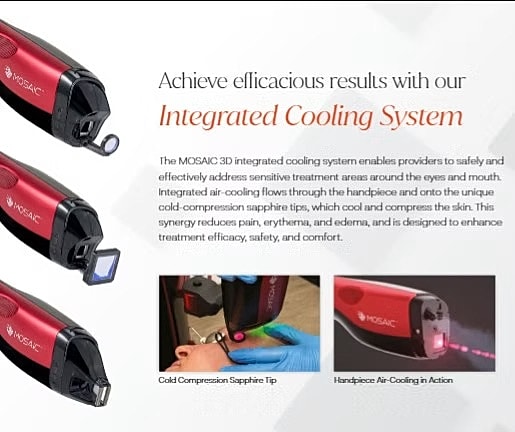
It is important to note there is no such thing as cold ablation. Ablation heats the tissue until it vaporizes. This leads to damaging the skin barrier. Companies use the word cold as they are comparing it to CO2 but in a relative sense to ablate is to heat. The only true cold laser is the Pico Laser that works through pressure and not heat. Although newer fractional laser systems can keep the epidermis cool allowing you to deliver energy deep like the Mosaic 3d and its one of kind sapphire cooling tip.
When ablative lasers are used at reduced depths:
Because the skin is ablated, there remains an inherent risk of:
These risks are not eliminated by reduced-depth treatment—they are part of the ablative mechanism itself.
Many so-called “no-downtime” laser procedures primarily affect superficial skin layers, which may improve brightness or texture but do not reach the deeper dermal levels where long-term collagen remodeling occurs.
Modern fractional and 3D laser technologies are designed differently. Rather than relying on surface ablation, they deliver controlled energy at precise depths, allowing meaningful collagen stimulation while maintaining surface integrity.
This distinction is critical for patients seeking:
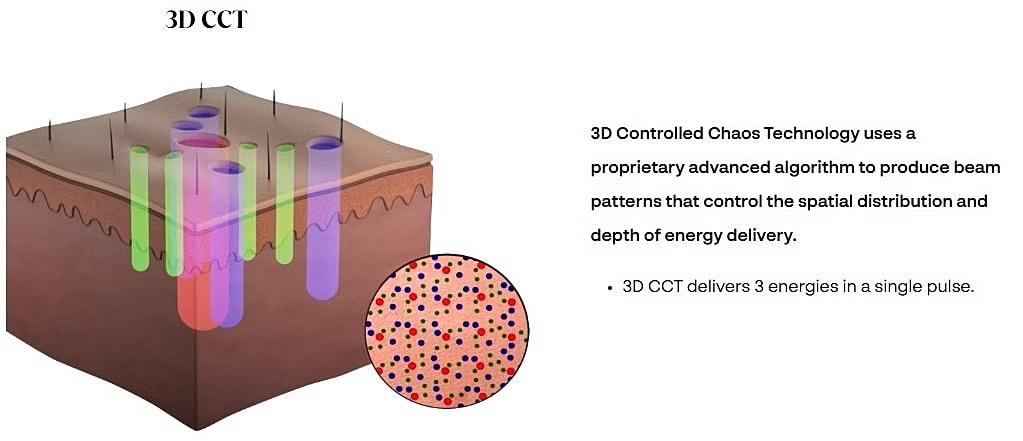
Learn more about depth-controlled resurfacing on our Laser Resurfacing in Miami page.
From a dermatologic standpoint, the question is not whether a laser is newer or older—but how it interacts with the skin biologically.
Ablative lasers, including CO₂ and Er:YAG systems, remove skin tissue to stimulate healing. Modern fractional and 3D laser systems aim to stimulate regeneration without unnecessary surface injury, offering a different balance between results, safety, and recovery.
A personalized consultation is essential to determine which approach aligns with a patient’s skin concerns, downtime tolerance, and long-term goals.
At Certified Cosmetics, laser resurfacing is performed using modern non-CO₂ technologies, including:
These technologies allow resurfacing to be tailored based on skin biology, recovery goals, and long-term skin health, rather than relying on a single aggressive approach.
See our full resurfacing philosophy on the Laser Resurfacing in Miami page
CO₂ laser resurfacing is not obsolete and may still be appropriate in select cases.
However, many patients seeking resurfacing today are better served by modern fractional laser technology that offers greater control, customization, and refinement.
A consultation allows a dermatologist to determine whether:
In my opinion CO2 Laser is great for those seeking aggressive resurfacing and are willing to take the risk and put up with the down time. If comfort and minimal risk is the goal: the answer is not newer CO2 or Cold ablative Lasers that still break the skin barrier. The answer is precision tools like superficial resurfacing and deep resurfacing devices that protect your skin barrier and still stimulate the skin to regenerate.
The ideal resurfacing option depends on:
Learn how we personalize resurfacing on our Laser Resurfacing in Miami page.
CO₂ laser resurfacing represents an earlier generation of skin resurfacing technology. While newer low-downtime ablative lasers exist, they remain limited by the biological trade-offs of surface ablation. Modern fractional and non-CO₂ laser systems now allow dermatologists to stimulate collagen regeneration with greater precision, depth control, and customization. At Certified Cosmetics in Miami, advanced laser resurfacing technologies are used to deliver natural-looking results aligned with modern aesthetic goals.
If you are considering CO₂ laser resurfacing or modern laser resurfacing in Miami, a personalized consultation is essential.
Patients visit Certified Cosmetics from across Miami, including Coral Gables, Pinecrest, Brickell, Coconut Grove, South Miami, and Miami Beach, to explore advanced resurfacing options guided by dermatology expertise.
Our consultations emphasize education, customization, and long-term skin health, helping you choose the resurfacing approach best aligned with your goals.
Learn how our broader skin tightening approach, including RF, lasers, and injectables, can be combined to address different stages of laxity and help you look naturally refreshed.
View treatment
Discover our signature laser based microneedling option for patients seeking comfortable collagen stimulation and tightening with minimal downtime.
Learn more
Explore advanced fractional laser resurfacing designed to refine texture, pores, and fine lines while supporting long term collagen production.
Next Gen Laser Resurfacing
Target sun spots, melasma, and uneven tone with our Pico 755 laser technology, often paired with tightening treatments for comprehensive skin rejuvenation.
Target dark spots
The Lavieen Laser is an advanced 4th-generation resurfacing laser, offering precise skin rejuvenation and brightening with minimal downtime. Perfect for achieving a refreshed, natural glow.
Superficial Laser Resurfacing
DermaV Vascular Laser offers a precise, comfortable solution for redness, rosacea, angiomas, and facial veins, with dual wavelengths and cooling technology for minimal downtime.
Treat Redness
Certified Cosmetics is located in West Kendall.
Our World Class Laser Center provides Laser Treatment for the Face and Laser Resurfacing near Miami, Kendall, Coral Gables, South Miami, Pinecrest, Brickell, Midtown Miami, Coconut Grove, Doral, Design District, Aventura, Key Biscayne, Miami Beach